
From Taboo to Revenue Stream
Ten years ago, the suggestion that a major North American sports league would partner with a betting company would have been met with blank stares and a few nervous laughs. Five years ago, it was a tentative experiment. Today, the NHL has built a web of betting partnerships so extensive that gambling branding is woven into the broadcast experience itself.

The shift accelerated after the US Supreme Court struck down the federal sports betting ban in 2018. Leagues that had spent decades distancing themselves from gambling suddenly saw a revenue stream they could not ignore. The NHL — smaller than the NFL, NBA and MLB in total revenue — moved faster than its peers to embrace the opportunity. The league signed its first official betting partnership in 2022 and has expanded those deals steadily since. In October 2025, the NHL became the first major sports league to partner with prediction market platforms Kalshi and Polymarket, signalling that the league’s appetite for gambling-adjacent revenue extends beyond traditional sportsbooks.
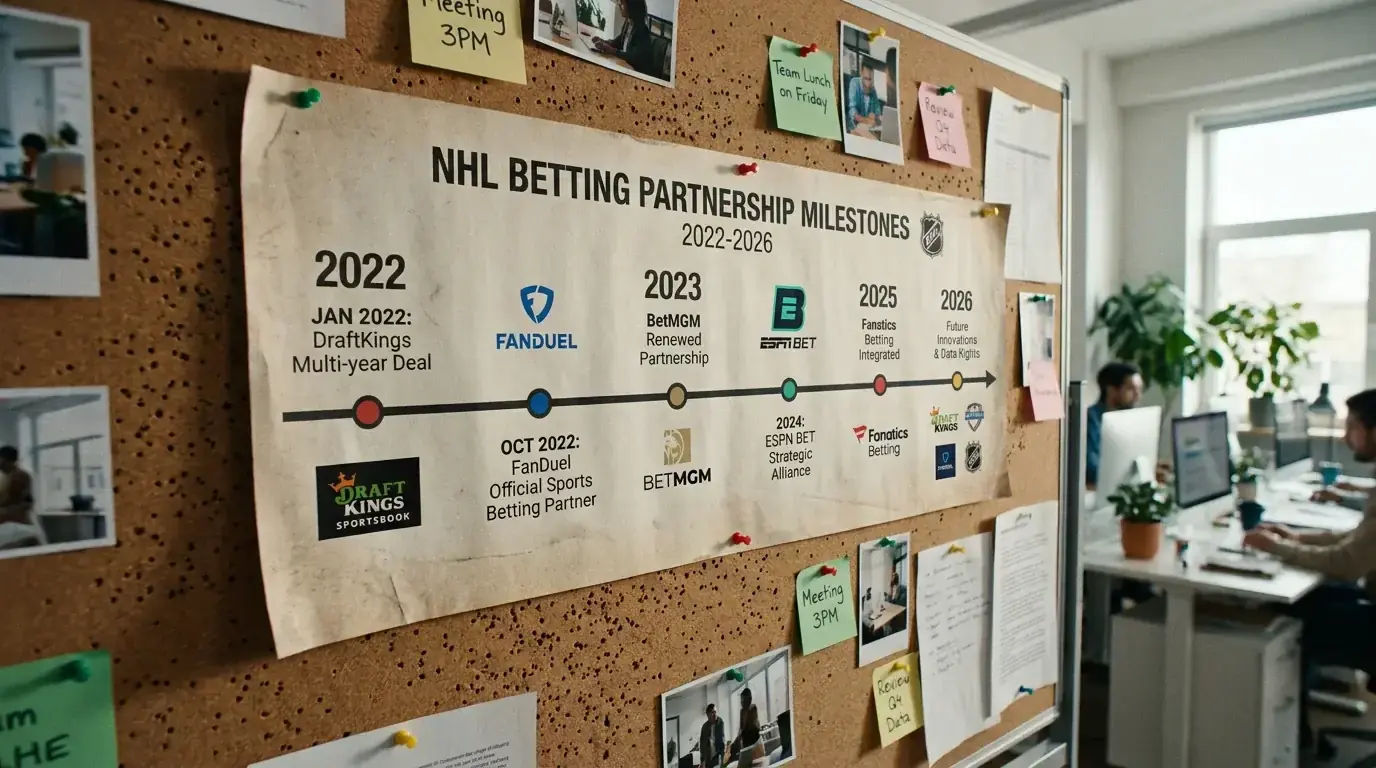
For bettors, these partnerships are more than corporate press releases. They shape the data you see, the odds you are offered, and the overall depth of the market you operate in.
FanDuel as the NHL’s First Official Betting Partner
FanDuel became the NHL’s first official sports betting partner in North America through a multi-year deal that launched in 2022. The partnership gave FanDuel exclusive branding rights during broadcasts, integration into the league’s digital platforms, and access to official data feeds for real-time odds generation.
What matters for bettors is what the deal changed in practice. Official data feeds mean the bookmaker receives play-by-play information fractions of a second faster than sites relying on third-party data. That speed advantage tightens live-betting lines and reduces the window for in-play value — a direct consequence of the partnership that in-play bettors need to account for.
The FanDuel deal also raised the NHL’s profile as a betting sport in North America. More promotional spend on hockey betting means more recreational money flowing into the market, which in turn creates more opportunities for informed bettors. When a sportsbook runs a “boost” on an NHL moneyline and thousands of casual bettors pile in, the line can shift beyond what the underlying probability justifies. Those distortions are temporary, but they are real — and they exist partly because partnerships like FanDuel’s drive promotional activity that would not otherwise target hockey.
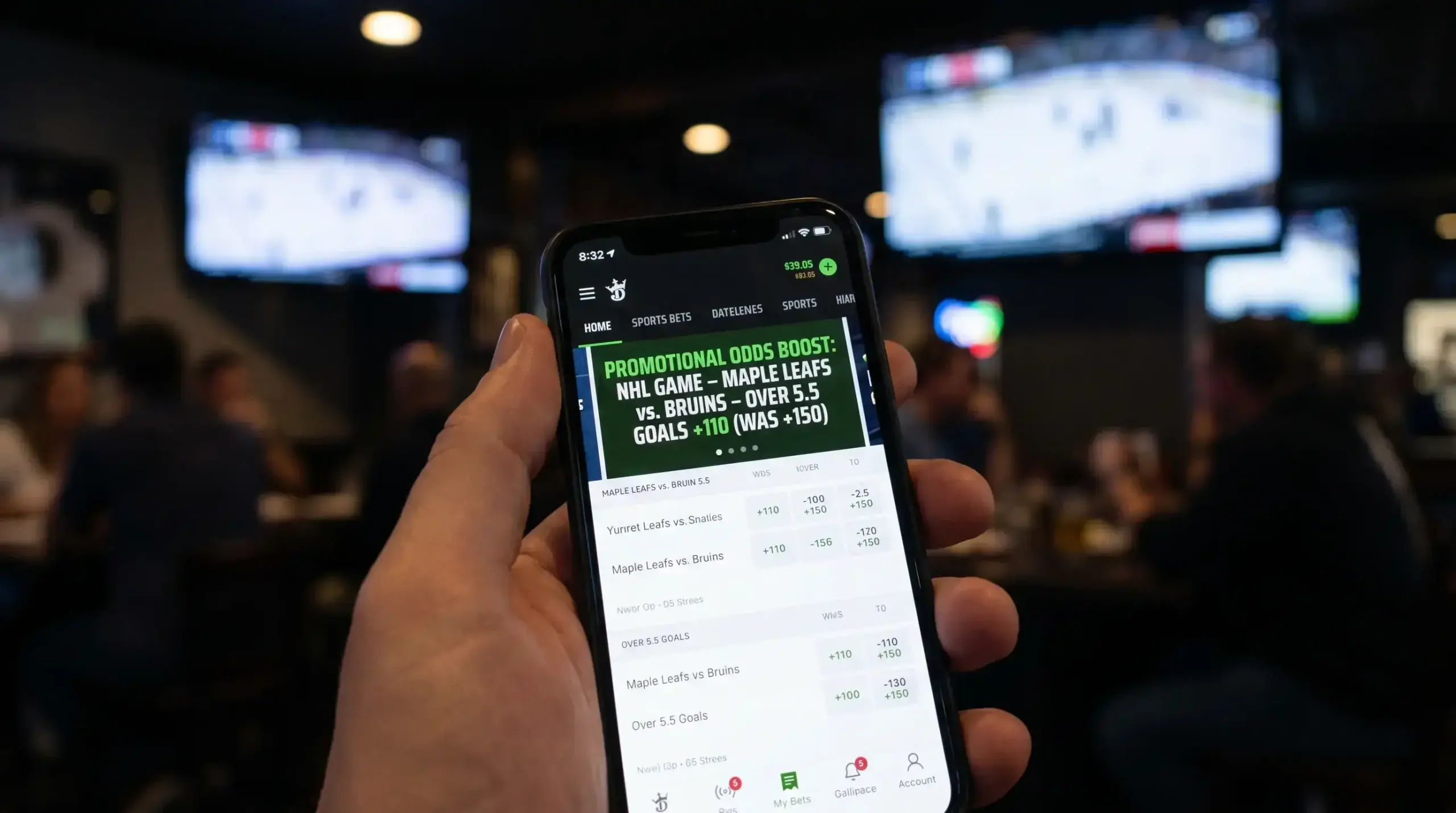
ESPN BET and other operators followed with their own NHL partnerships, further expanding the ecosystem. The league’s Ontario Lottery and Gaming deal brought hockey betting into Canada’s regulated market, with one executive noting the partnership would complement the ultimate sports betting experience for hockey fans. The cumulative effect is a sport that has moved from betting afterthought to an actively promoted wagering product in under five years.
Kalshi, Polymarket and the Prediction Market Frontier
The Kalshi and Polymarket partnerships represent something genuinely new. Prediction markets are not sportsbooks — they allow users to buy and sell contracts on the outcome of events, functioning more like a financial exchange than a traditional bookmaker. Kalshi’s CEO, Tarek Mansour, described the NHL deal as an important milestone, pointing to the integrity, safety and trust with consumers that his platform had spent years building.
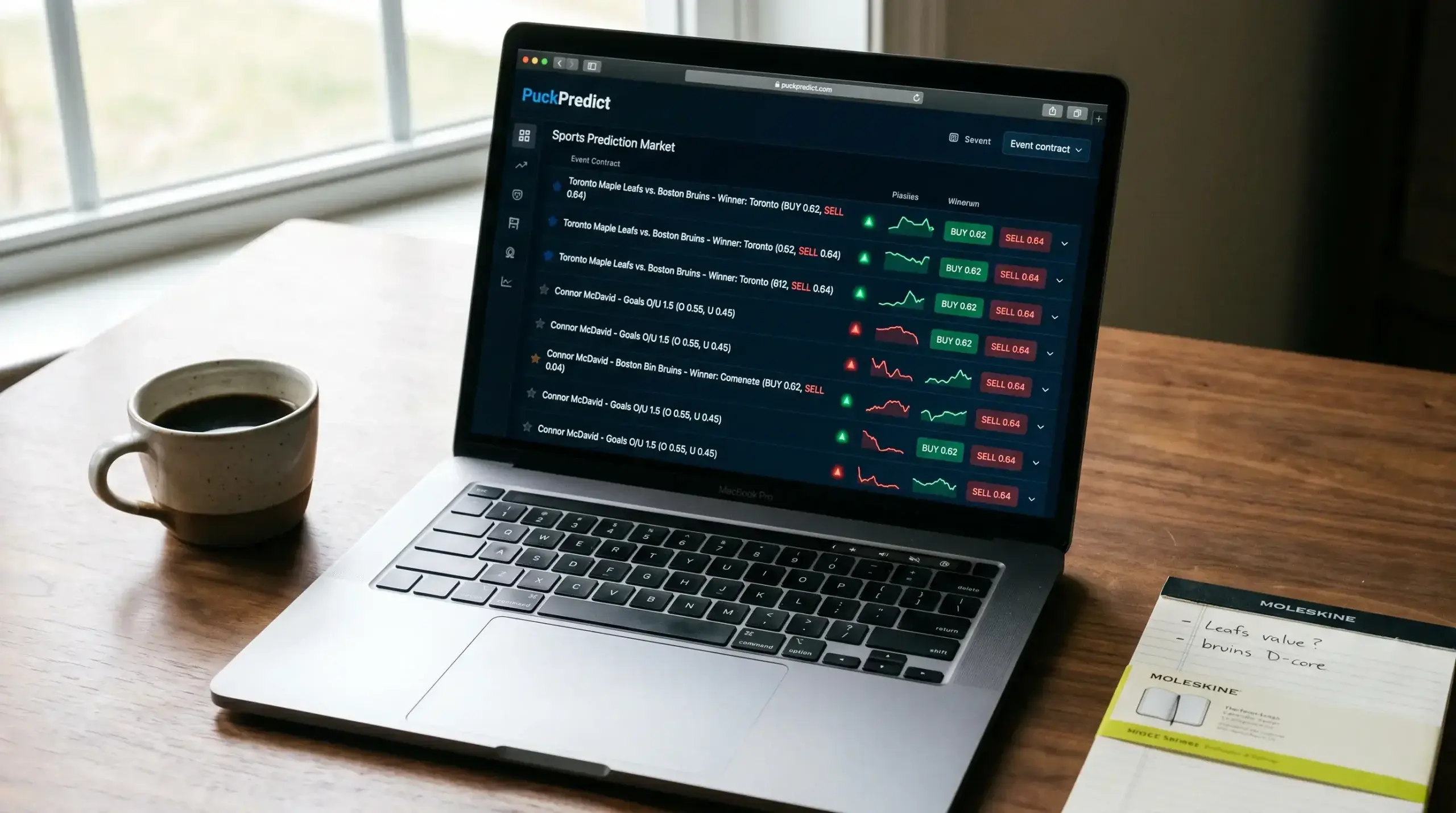
For UK bettors, prediction markets remain largely a spectator sport — Kalshi operates under US regulation and is not available to UK customers at present. But the partnership signals a direction of travel. As prediction markets expand and regulatory frameworks evolve, UK bettors may gain access to hockey event contracts that offer different pricing structures from traditional fixed-odds betting. The absence of a traditional overround on exchange-style platforms can mean sharper prices for those who know how to use them.
The broader implication is that the NHL sees gambling not as a single revenue line but as a category of partnerships spanning sportsbooks, prediction markets and potentially other formats yet to emerge. Each new partnership deepens the market, brings in more participants, and increases the volume of money flowing through hockey betting — all of which, over time, should produce tighter and more liquid markets for bettors worldwide.
What NHL Partnerships Mean for UK Bettors
Most NHL betting partnerships are structured around the North American market. UK bettors do not have direct access to FanDuel, ESPN BET or Kalshi. But the knock-on effects reach across the Atlantic in several ways.
First, increased NHL betting volume in North America tightens the global market. UK bookmakers derive their NHL lines partly from the US market, so sharper US prices produce sharper UK prices. The days of finding absurdly wide overrounds on NHL moneylines at UK platforms are fading, though the overround on hockey still exceeds football’s because handle remains smaller.
Second, the partnerships have driven a surge in NHL content production — broadcasts, podcasts, data visualisations, social media coverage — that UK bettors benefit from as information consumers. More accessible analysis means more tools for building your model, even if the content was originally produced for an American audience. UK remote betting generated £2.4 billion in GGY, with football dominating — but the infrastructure around NHL analysis has grown fast enough that hockey bettors in the UK now have access to quality data that simply did not exist five years ago.
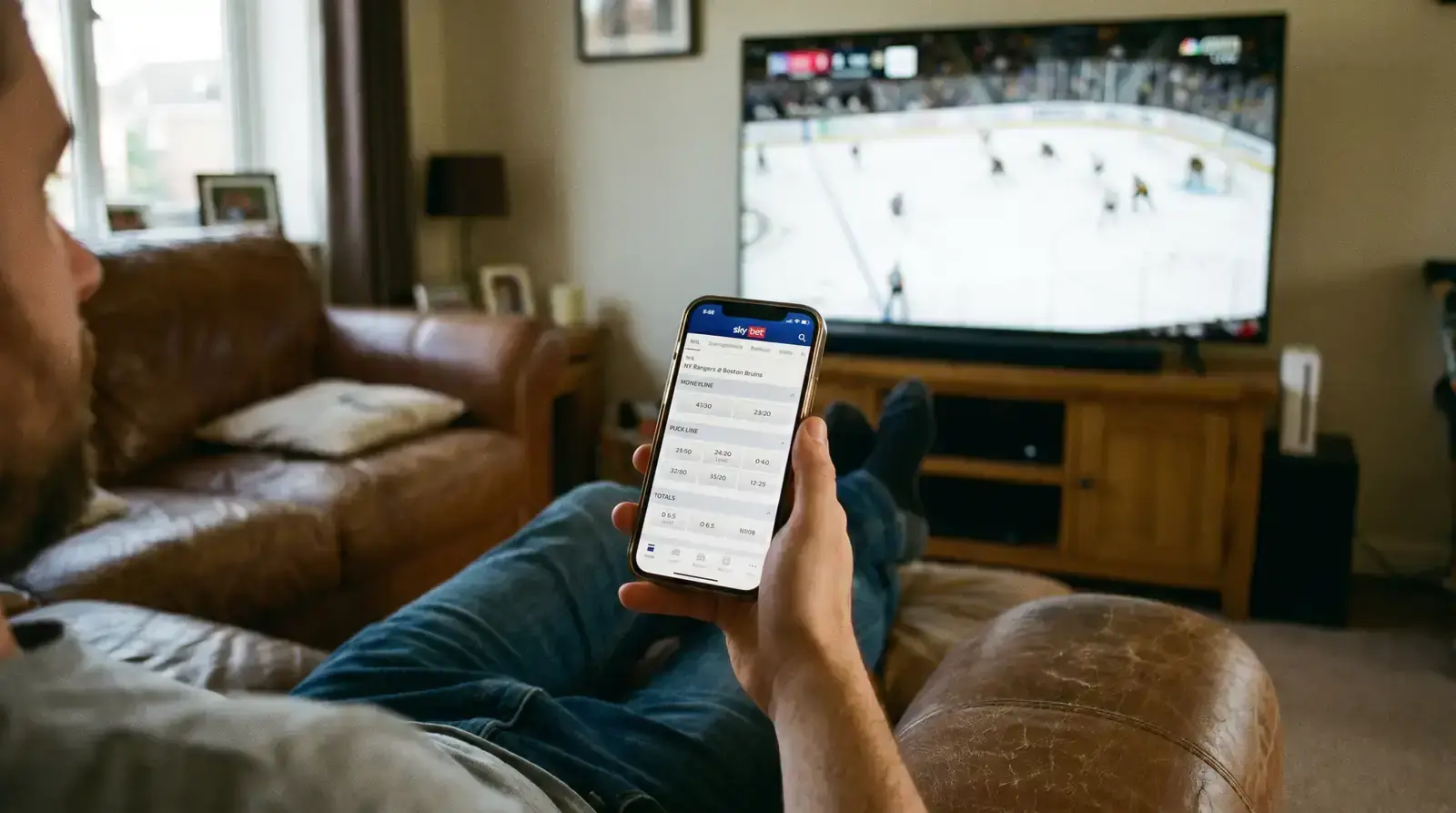
Third, the competitive pressure from partnership-backed platforms pushes UK bookmakers to improve their hockey offering. If a rival platform offers deeper NHL markets because of a data partnership, others must follow or risk losing customers. That race benefits the end user through more markets, more props, and — gradually — tighter margins.
The betting integrity guide covers the flip side of this expansion: how the growth of legal betting partnerships intersects with integrity monitoring and the ongoing effort to prevent match manipulation.