

Two Leagues, Two Betting Ecosystems
I spent my first three years of hockey betting exclusively on the NHL. When I placed my first EIHL wager — a moneyline on the Nottingham Panthers — I treated it like a smaller version of the same thing. It was not. The Panthers lost, and the lesson cost me more than the stake: the two leagues operate in different betting ecosystems, and the strategies that work in one do not automatically transfer to the other.
The NHL projects revenue of $7.5 to $8 billion for 2025-26. It plays to arenas averaging 96% capacity, draws billions in broadcast money, and supports a betting market so liquid that sharp bettors and syndicates move lines within minutes of team news. The EIHL set its own attendance record in 2025-26 with 1,321,128 fans through the turnstiles — impressive growth, but the league’s financial and analytical infrastructure is a fraction of the NHL’s. That gap shapes everything from the odds you see to the information available for your analysis.
Understanding the differences is not about choosing one league over the other. It is about adjusting your approach so you do not apply a microscope when you need binoculars, or vice versa.
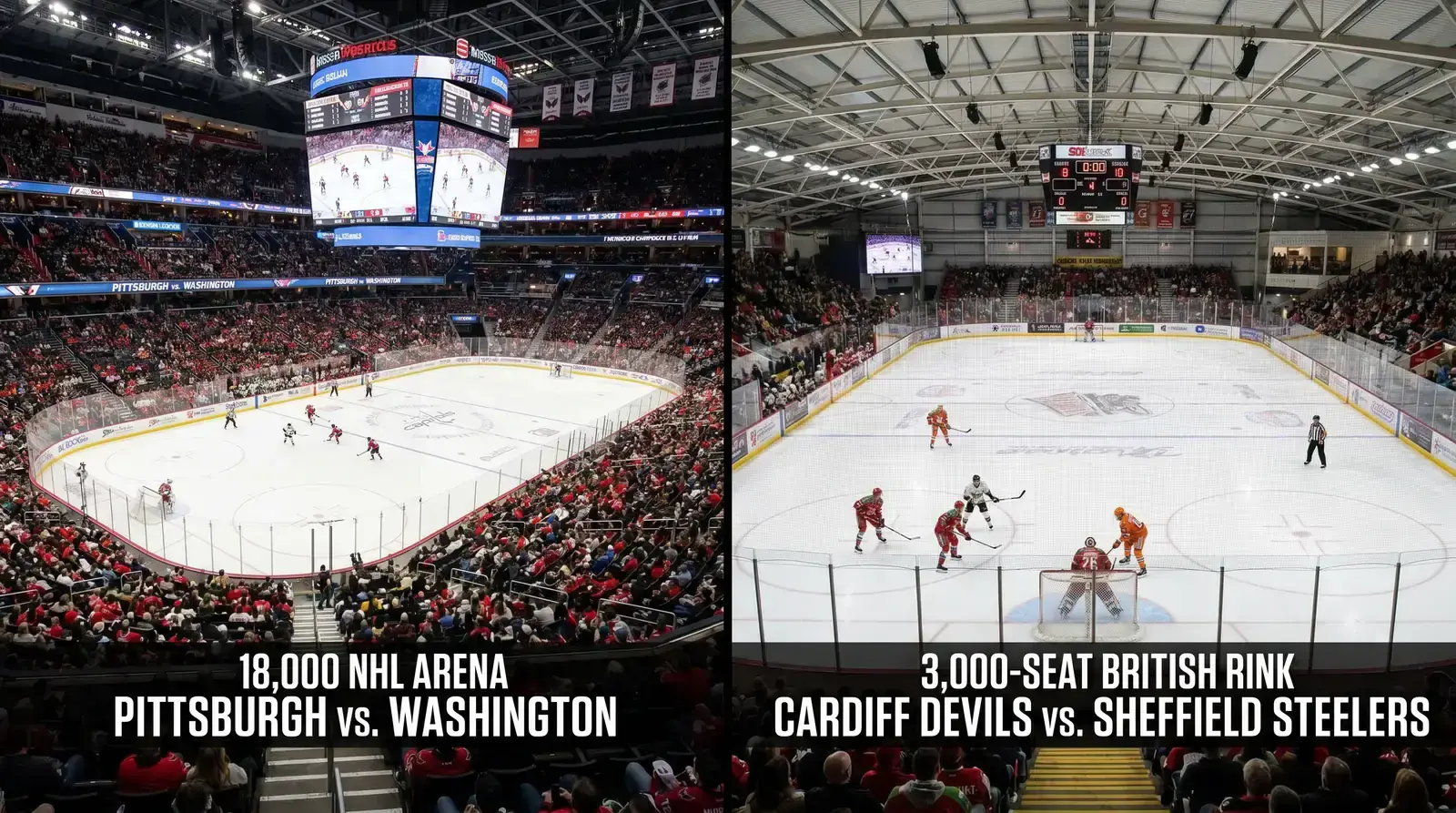
Data Depth — NHL Analytics vs EIHL Basics
If the NHL is a data ocean, the EIHL is a paddling pool. NHL bettors can access Corsi, Fenwick, expected goals, zone entries, shot heatmaps, line matchup data and goaltender tracking metrics — most of it free. Eight of the ten teams with the best CF% in recent seasons have made the playoffs, giving possession metrics genuine predictive power backed by large samples.
EIHL analytics barely exist in public. You get goals, assists, penalty minutes, and basic goaltending stats. No shot-attempt data, no expected goals models, no detailed special-teams breakdowns. The absence of data does not mean the EIHL is unbettable — it means the edge comes from a different place. Local knowledge, attending games, following team social media for injury and lineup news, and building your own simple tracking spreadsheets can give you information the bookmaker does not have.
I started tracking EIHL shot counts manually two seasons ago, charting them from the arena when I attended and from video replays when I did not. The sample is crude compared to NHL models, but it revealed patterns — teams that consistently outshot opponents at home were underpriced on the moneyline over the following month. That kind of basic data collection is the EIHL equivalent of running an xG model, and very few bettors bother.

Market Availability and Liquidity
UK remote betting generated £2.4 billion in gross gaming yield in the last reported period, with football and horse racing consuming the vast majority. Hockey’s share is small, and the EIHL’s share of hockey betting is smaller still. That translates directly into fewer markets and wider margins.
For a typical NHL game, a UK bookmaker might offer moneyline, puck line, totals, period betting, player props, first goal scorer, and various specials. For an EIHL match, you are often limited to moneyline and sometimes a totals line — no handicaps, no period markets, no props. The overround on EIHL moneylines is typically wider than on NHL equivalents, reflecting the bookmaker’s greater uncertainty about outcomes in a league with less data and lower handle.
Liquidity matters too. NHL lines move in response to sharp money, which means the price you see at 10 a.m. may differ materially from the price at 6 p.m. EIHL lines barely move at all because the volume is not there to force adjustments. That static pricing can work in your favour if you have identified genuine value — the line will not shorten before you can get your stake down. But it also means there is no “steam” to follow: you cannot piggyback on sharp action because sharp action on EIHL is negligible.

Adapting Your Strategy to a Smaller League
My NHL process is model-driven: pull the data, run the numbers, identify disagreements between the model and the market. My EIHL process is intelligence-driven: monitor lineups, check social media for practice reports, note which import players have arrived or departed, and watch for schedule quirks like long bus trips between venues.
Roster volatility is the single biggest EIHL-specific factor. Teams carry smaller squads, rely heavily on import players, and can see their competitive outlook shift overnight if a key forward is released or a new signing arrives from North America. The bookmakers rarely adjust lines quickly enough to reflect these moves, because the information travels through niche channels that automated pricing models do not monitor.
I also weight home advantage more heavily in the EIHL than in the NHL. Smaller arenas, louder crowds relative to capacity, and genuine travel fatigue from long coach journeys between UK cities all amplify the home edge. The NHL’s 56.6% home win rate is well documented; the EIHL’s equivalent feels higher based on my tracking, though the absence of comprehensive public data makes a precise figure difficult to pin down.
Scheduling deserves extra scrutiny in the EIHL. Teams occasionally play three games in four days — a brutal rhythm that NHL sides rarely face outside of playoff scheduling. When one team is fresh and its opponent is on the third game of a weekend cluster, the form book goes out the window. I flag these mismatches in a weekly calendar and treat them as standalone opportunities, separate from any model or trend I am following.

Bankroll allocation between the two leagues matters as well. I stake less on EIHL bets than on NHL bets, typically half my standard unit size, because the wider margins and thinner data increase variance. The potential for value is high, but so is the uncertainty, and sizing your stakes accordingly protects against the swings.
For a full breakdown of EIHL-specific angles, the EIHL betting tips guide covers team profiles, market depth and strategies tailored to British hockey. Gary Bettman may have declared that every platform and every revenue source in the NHL is growing, but it is the EIHL’s grassroots expansion — four consecutive years of record attendance — that offers the most untapped value for UK bettors willing to do the legwork.