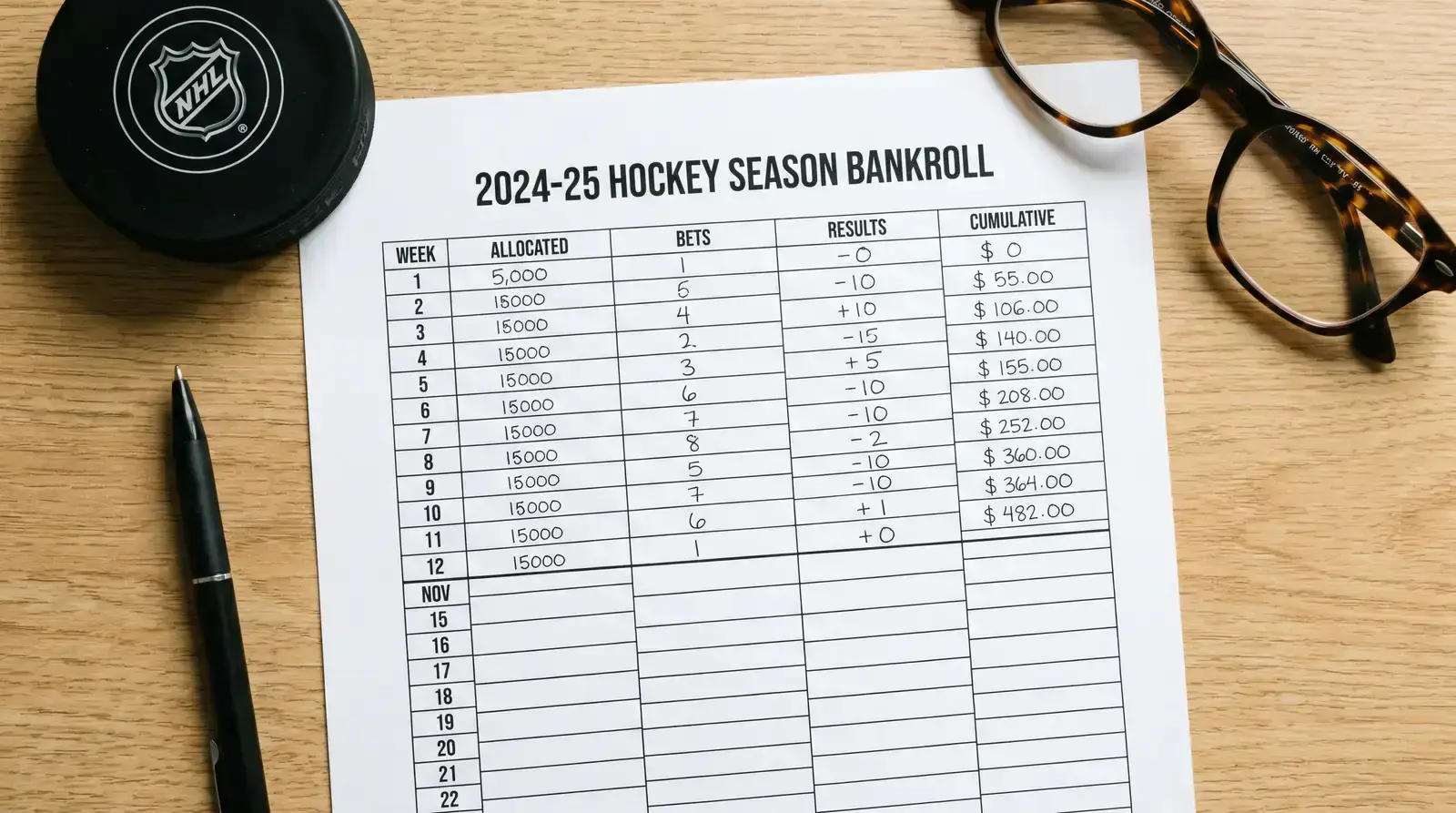

The One Skill That Separates Winners From Losers
I had my best-ever analytical month in November 2021 — 58% hit rate on NHL moneylines, strong CLV, every model signal firing perfectly. I still finished the month down. The reason? I had doubled my stakes after a hot October, got caught in a five-game losing streak at inflated unit sizes, and wiped out the gains before the winners arrived. Bankroll management is not the exciting part of betting. It is the part that keeps you in the game long enough for the exciting part to matter.
Betting on sports — 10% of UK adults participate, with men wagering at four times the rate of women — is fundamentally a game of variance management. Even a profitable strategy produces losing weeks and losing months. The difference between a bettor who thrives and one who blows up is not the quality of their picks; it is the discipline of their staking. Every pound you wager should be a deliberate allocation from a defined pool, not an emotional reaction to the last result.
Flat Stakes vs the Kelly Criterion
Two staking methods dominate serious betting: flat staking and the Kelly criterion. Each has strengths, each has traps, and the right choice depends on your temperament and your confidence in your own probability estimates.
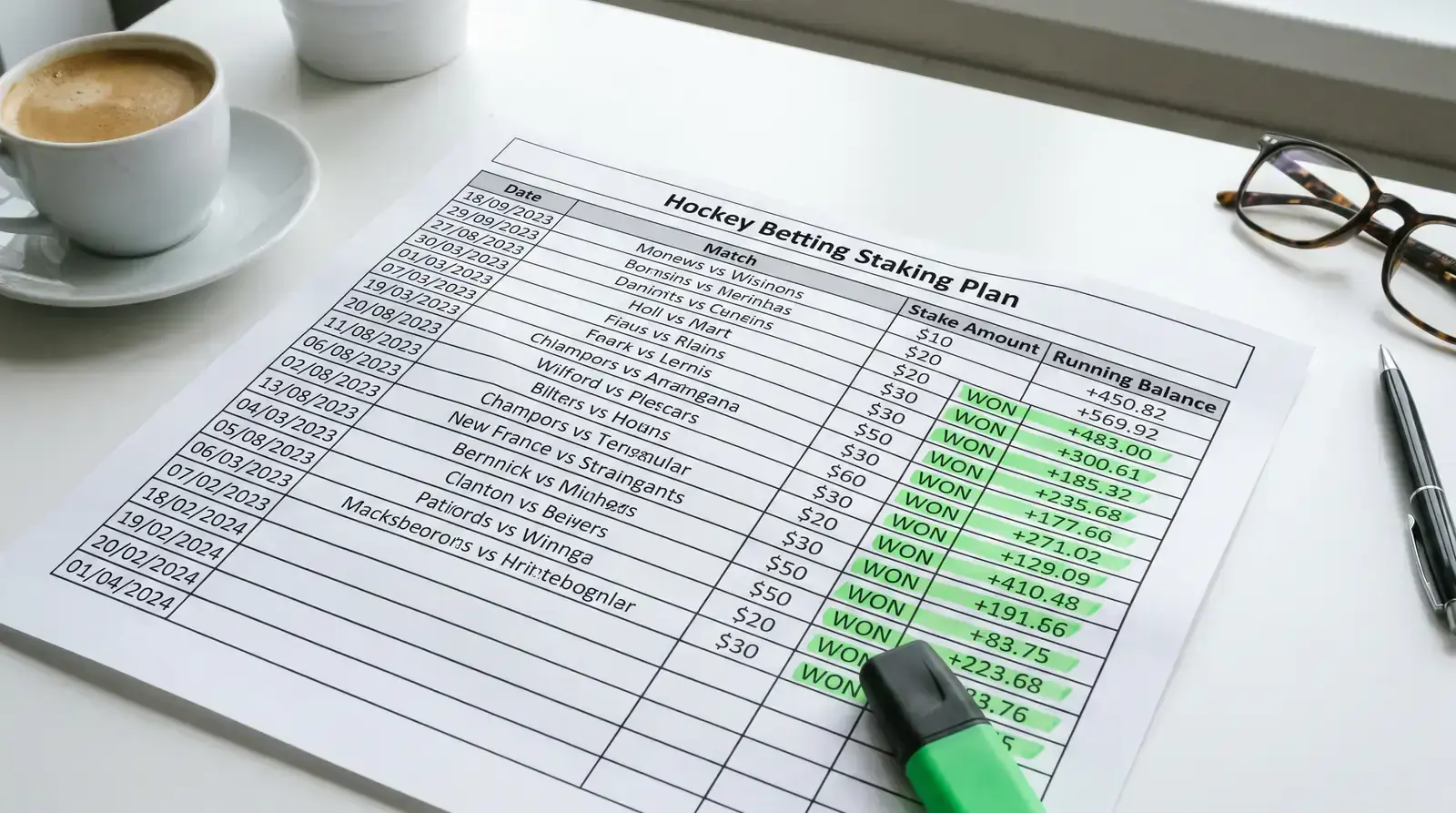
Flat staking is the simpler of the two. You assign a fixed unit size — typically 1% to 3% of your total bankroll — and bet that amount on every selection regardless of perceived edge. A £1,000 bankroll at 2% units means every bet is £20, whether you think the edge is 2% or 8%. The advantage is emotional insulation: you never talk yourself into a dangerously large stake because the system does not allow it. The disadvantage is inefficiency — a high-confidence bet and a marginal one receive identical capital.
The Kelly criterion is more aggressive and more mathematically optimal in theory. It calculates the ideal stake as a function of your edge divided by the odds, allocating more capital to bets where your model identifies a larger advantage. The formula: stake = (bp – q) / b, where b is the decimal odds minus one, p is your estimated probability of winning, and q is the probability of losing. A bet with a 5% edge at 2.00 odds gets a larger unit than a bet with a 2% edge at 1.80.
The problem with full Kelly is that it assumes your probability estimates are perfectly accurate. They are not. Overestimate your edge by even a small margin and Kelly will systematically over-stake, accelerating drawdowns rather than maximising growth. I use a half-Kelly approach — dividing the Kelly-recommended stake by two — which sacrifices some theoretical growth for a massive reduction in variance. For hockey betting, where goaltender uncertainty alone can swing true probabilities by five percentage points, that buffer is essential.

Setting Drawdown Limits and Session Rules
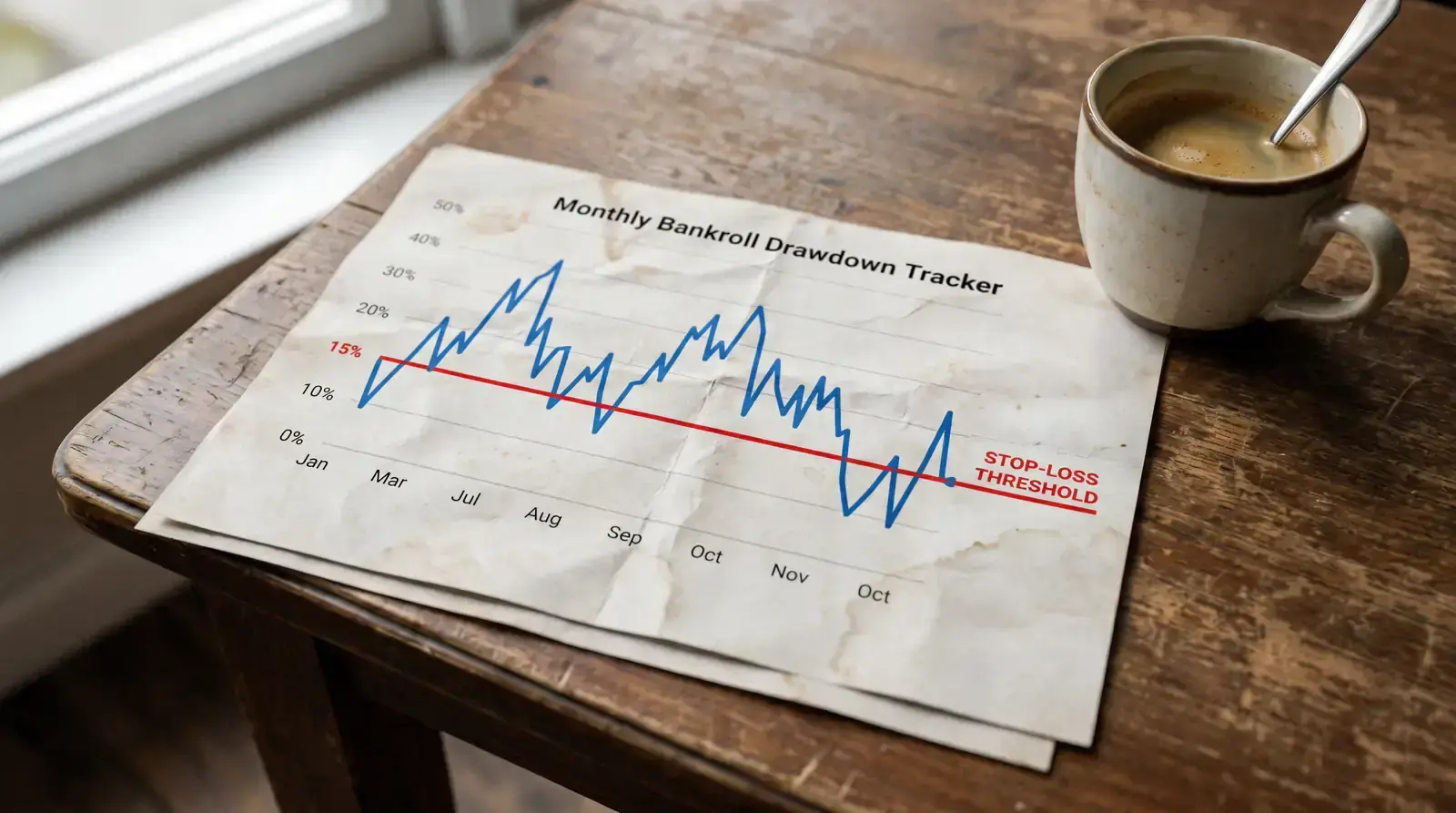
Every profitable bettor I know has a stop-loss rule. Mine is 15% of my monthly bankroll. If I lose 15% in any given month, I stop placing bets for the remainder of that month regardless of how many “value” spots I think I see. The rule is non-negotiable, and it has saved me from spiralling losses more times than I care to count.
Drawdown limits work because they interrupt the most dangerous feedback loop in betting: losing leads to frustration, frustration leads to larger stakes or looser selection criteria, and both accelerate further losses. A hard stop-loss breaks the cycle mechanically, removing decision-making from a state where your judgement is compromised.
Session rules add a second layer of protection. I never place more than five bets on a single NHL game night, regardless of how many games are on the slate. I never increase my unit size mid-month. And I never chase a loss by adding an unplanned bet to the evening’s slate. These rules sound rigid because they are. Rigidity is the point — it replaces emotional decision-making with a pre-committed structure that your rational self designed when the pressure was off.

For bettors who want to understand how staking discipline connects to finding edge in the first place, the value betting guide covers expected value calculation and closing line tracking in detail.
A Monthly Bankroll Template for Hockey Season
I structure my hockey betting bankroll on a monthly cycle that resets on the first of each month. The system is straightforward and requires only a basic spreadsheet to maintain.
Start with a defined bankroll — the total amount you are willing to risk over the full season. Divide that by the number of months in the NHL season (roughly seven, October through April). That gives you your monthly allocation. Set your unit size at 1.5% to 2% of the monthly allocation. Track every bet: date, matchup, market, odds, stake, result, running total.
At the end of each month, review the numbers. If the month was profitable, add the profit to the next month’s allocation (or withdraw half and add the remainder — my personal preference). If the month was a loss, the next month starts with the standard allocation minus a proportional reduction. This rolling structure prevents a single bad month from devastating your annual bankroll while allowing winning months to compound.
The key discipline is keeping the monthly allocation separate from your daily finances. This is not rent money, not savings, not an emergency fund. It is a defined risk pool, and treating it as such removes the emotional weight that turns measured bets into reckless ones. When the pool is gone, you stop — no exceptions, no loans from next month, no top-ups from other sources. That boundary is what makes the system work.