
Home Ice Is Real — but Overpriced?
Early in my betting career I leaned heavily on home favourites. The logic felt airtight: home teams in the NHL win 56.6% of their games, so backing them should deliver a steady drip of profit. It did not. I finished that first season slightly down on home moneyline bets, and the reason was painfully simple — the bookmaker already knew about the 56.6%, and the price reflected it.
Home ice advantage is one of the most well-documented phenomena in hockey. In the 2024-25 season, NHL teams went 788-474-95-36 at home versus 605-630-117-41 on the road. The gap is genuine, driven by tangible factors that compound across sixty minutes of play. But “real” does not mean “profitable.” An edge only becomes a betting edge when the market underestimates it. The question is not whether home ice matters — it clearly does — but whether specific situations exist where the market fails to price it correctly.
What Creates Home Ice Advantage in the NHL
The last change is the mechanism that separates hockey’s home advantage from almost every other sport. The home team gets to make the final line change before each faceoff, which allows the coach to deploy his top shutdown pair against the opposition’s best forwards and his offensive line against weaker defenders. Over a sixty-minute game, those matchup advantages accumulate.
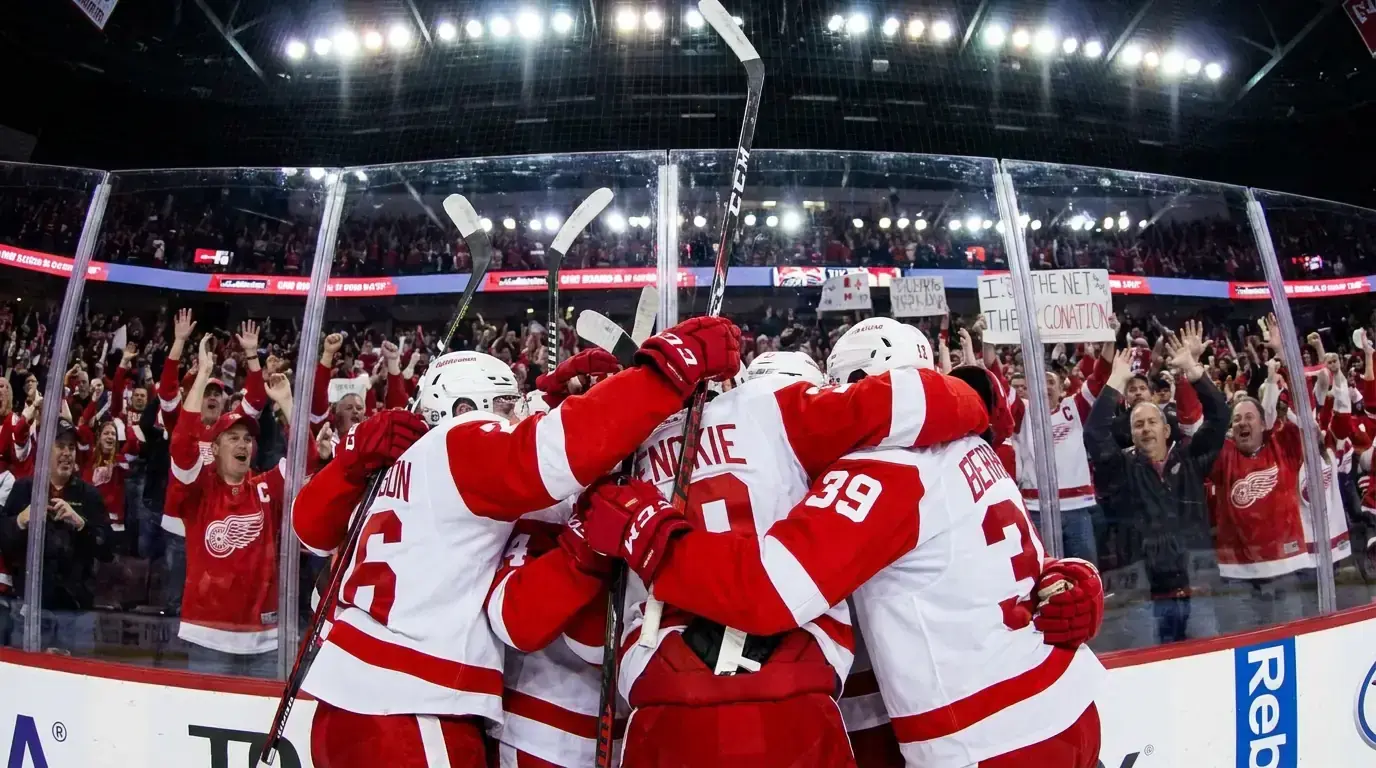
Crowd energy is harder to quantify but impossible to ignore. NHL attendance hit a record 23.16 million fans in the 2025-26 regular season at roughly 96% arena capacity. A sellout crowd generating sustained noise affects referee behaviour (penalty calls skew slightly toward the home side in most studies), rattles visiting goaltenders during critical moments, and lifts home players in tight third periods. The effect is small per event but meaningful across a full game.
Travel fatigue feeds the advantage in less visible ways. A West Coast team arriving in the Eastern time zone for a 7 p.m. start is playing at 4 p.m. body-clock time — not ideal for peak athletic performance. Teams on multi-game road trips accumulate sleep disruption, practice limitations and general wear that home teams simply do not face. These factors are hardest for bookmakers to model precisely, which is where the mispricing opportunities live.
Familiarity with the rink matters too. Every NHL arena has its own quirks — board angles, glass stiffness, lighting, ice quality. Home teams practise on their own surface daily; visitors get a brief morning skate at best. The advantage is marginal, but marginal advantages stack.

How Bookmakers Price Home Ice and Where They Misprice It
Bookmakers assign a baseline home-ice premium to every game, typically worth ten to fifteen cents on the moneyline. A team that would be -130 on a neutral surface becomes -140 or -145 at home. That premium is baked into the opening line and adjusted as betting action flows in.
The baseline is usually accurate for average situations. Where it breaks down is at the extremes. Teams returning home after a long road trip of four or more games carry a rest and morale advantage that exceeds the standard home premium. The market sometimes accounts for this, sometimes does not — particularly when the returning team’s record on the road trip was poor, causing the public to fade them despite the favourable scheduling.
Conversely, home ice advantage shrinks in certain scenarios that the market is slow to recognise. A home team on the second night of a back-to-back, playing its backup goaltender, with a key defenceman injured, is not a standard home favourite — yet the baseline premium can persist in the price longer than it should. I look for spots where the usual home premium is either too high or too low relative to the specific context, rather than betting home sides indiscriminately.
Division rivals present another wrinkle. Teams in the same division play each other multiple times per season, and the visiting side accumulates tactical familiarity that erodes the home advantage. The gap between home and away win rates in divisional matchups is narrower than in non-divisional games — a nuance that blanket home-ice pricing does not always capture.

Does Home Ice Matter More in the Playoffs?
Playoff home ice advantage is a different animal. The intensity increases, the crowds are louder, and the stakes magnify every small edge. Historically, home teams win playoff games at a rate slightly above the regular-season average, though the sample sizes per year are small enough that the data fluctuates.
What changes materially in the playoffs is the coaching dimension. With set matchups — no rotating opponents, just the same two teams for up to seven games — the home coach’s last-change advantage becomes even more potent. By Game 3 or 4, the home coach knows exactly which matchup he wants to exploit and can deploy his roster with surgical precision. Visiting coaches are forced to react rather than dictate, and that asymmetry shows up in shot differentials and expected goals.
I weight home ice more heavily in the early rounds of the playoffs, when the matchup is fresh and the home crowd is at peak emotional investment. By the Conference Final and Stanley Cup Final, both teams have adjusted to each other’s systems, and the home advantage plateaus. The betting angle here is not to bet home teams blindly in the playoffs but to bet them selectively in Games 1 and 2 of opening-round series, where the market often underestimates the combined effect of last change, crowd energy and the visiting team’s playoff nerves.

For a broader view of how travel and schedule density interact with home advantage, the schedule fatigue and travel guide covers the logistical side in detail.