
The Cheapest Edge in Hockey Betting
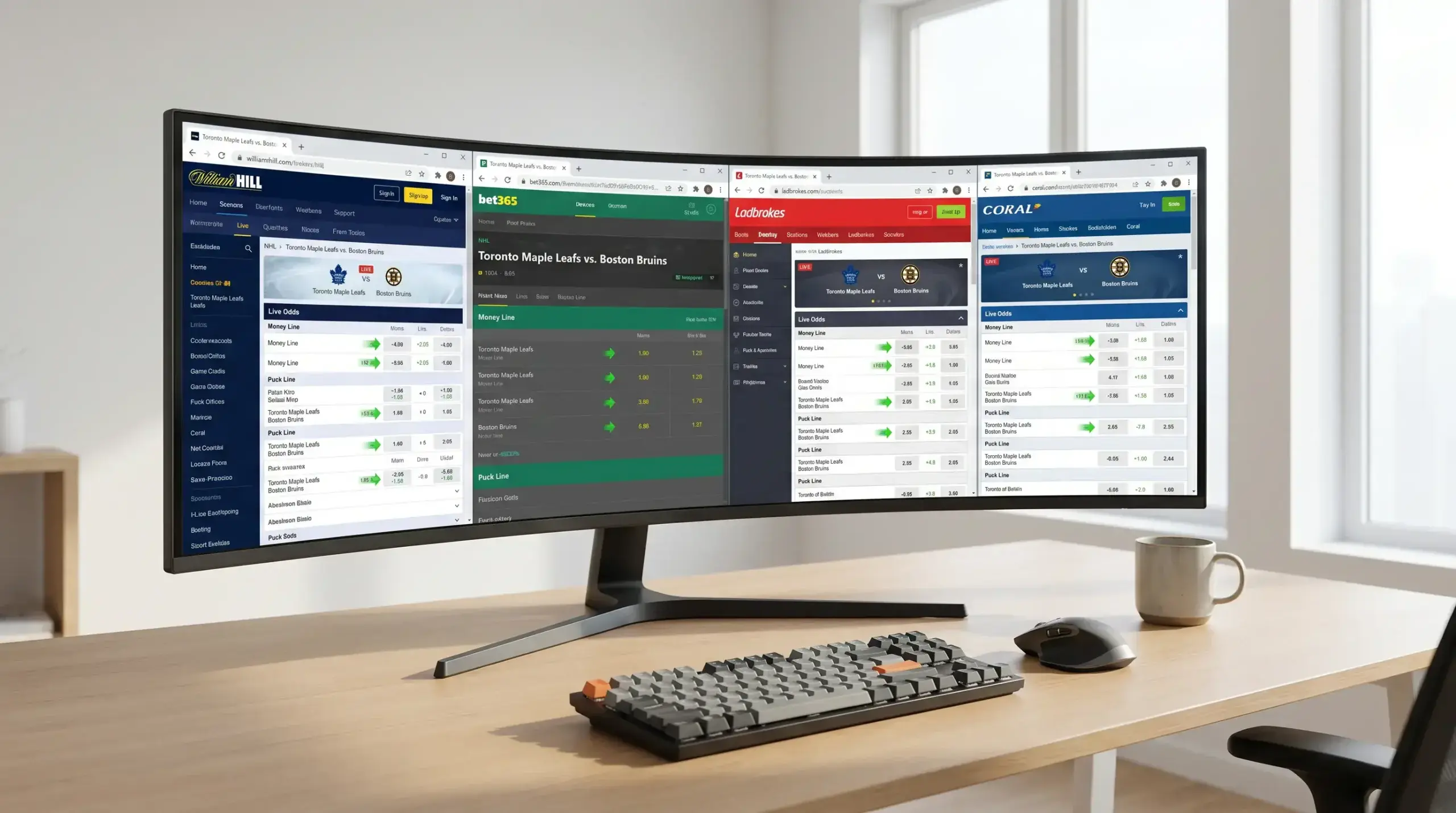
I keep a screenshot from a Tuesday night three seasons ago. Two UK bookmakers had the same NHL game priced at -145 and -130 on the home moneyline. Same team, same game, same night — fifteen cents of difference sitting right there on my screen. Backing the home side at -130 instead of -145 saved me roughly 3% in implied probability on a single bet. Over a full season of wagers, that kind of gap compounds into hundreds of pounds of additional profit for zero extra analytical effort.
Line shopping is the simplest edge in sports betting and the one most punters ignore. It requires no model, no data skills, and no insider knowledge. All it requires is accounts with multiple bookmakers and two minutes of comparison before placing each bet. The global sports betting market hit $119.26 billion in 2025 — the vast majority wagered by people who place their bet at the first price they see. Do not be one of them.
How Much Do NHL Lines Vary Across UK Platforms?
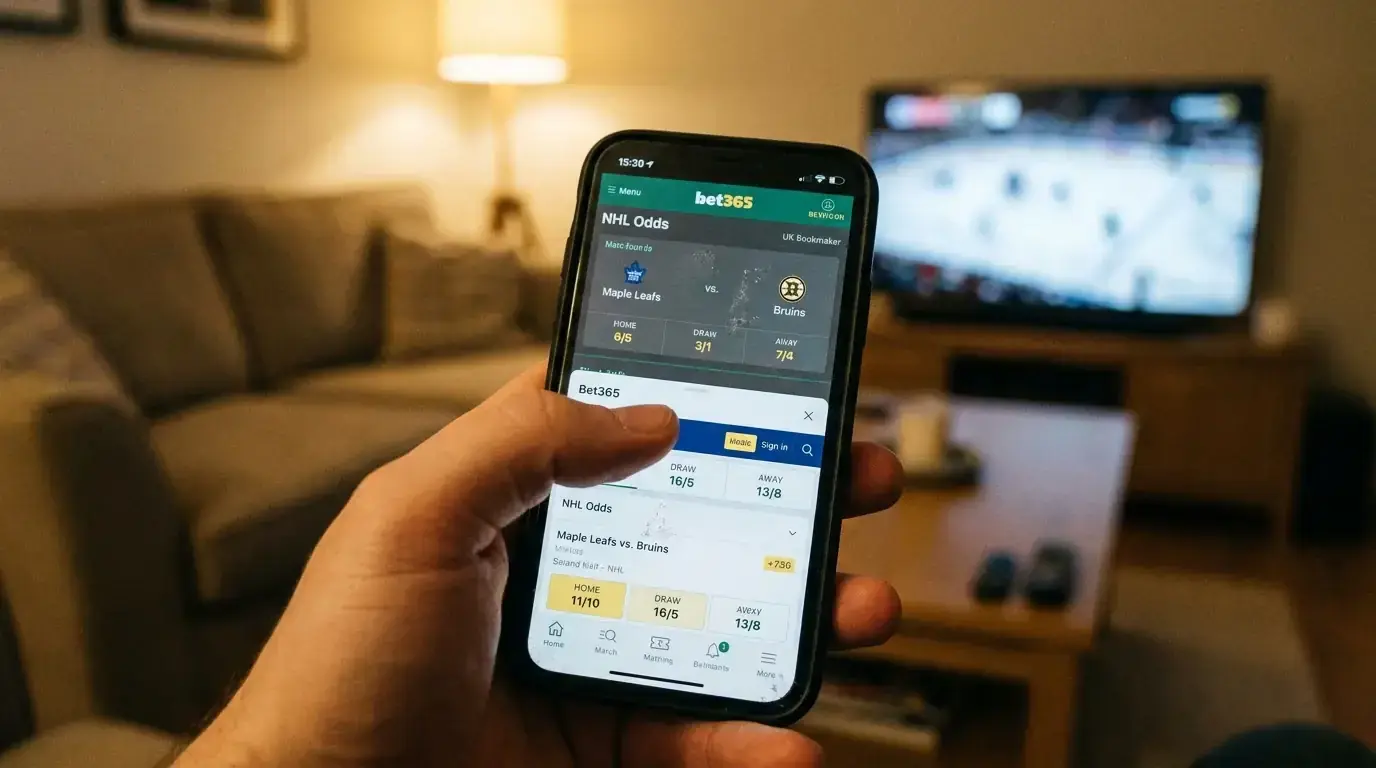
Football dominates UK remote betting with over £1.1 billion in gross gaming yield, and that dominance means football lines are razor-tight across platforms. Hockey sits in a smaller bracket where bookmakers allocate fewer pricing resources, and the result is wider variance between operators. On a typical NHL game night, I routinely find moneyline differences of 5-15 cents between platforms. Totals lines differ by half a goal less frequently but carry different juice that affects the payout on the same number.
The variance increases for secondary markets. Period betting, player props and puck lines are priced with less precision because the handle is smaller, and the gaps between operators can be dramatic. I have seen shots-on-goal props differ by a full 0.5 in the line offered, which represents a massive edge for anyone paying attention.
Opening lines show the most variance. When lines are first posted — often in the morning UK time for that evening’s NHL games — the bookmakers have not yet absorbed enough betting action to converge on an efficient price. By the afternoon, sharp money flows in, lines adjust, and the gaps narrow. Early access matters: checking prices within an hour of opening gives you the widest selection of favourable numbers.

One practical observation: some UK bookmakers are consistently tighter on NHL moneylines than others. Over the course of tracking three full seasons, I found that the overround difference between the tightest and widest operators averages 2.5% per game. That is a structural advantage available to anyone who holds accounts with the right platforms.
The Maths Behind Line Shopping
The edge from line shopping is not dramatic on any single bet. A 3% improvement in implied probability sounds modest. But betting is a volume game, and small advantages compound ruthlessly over large samples.
Consider a bettor placing 300 NHL bets per season at an average stake of £20. If line shopping improves the average price by just 2%, that shifts the expected value of each bet by £0.40. Over 300 bets, that is £120 — enough to cover a month’s bankroll replenishment or fund additional positions. And 2% is conservative; on prop markets and period bets, the improvement is often 4-6%.
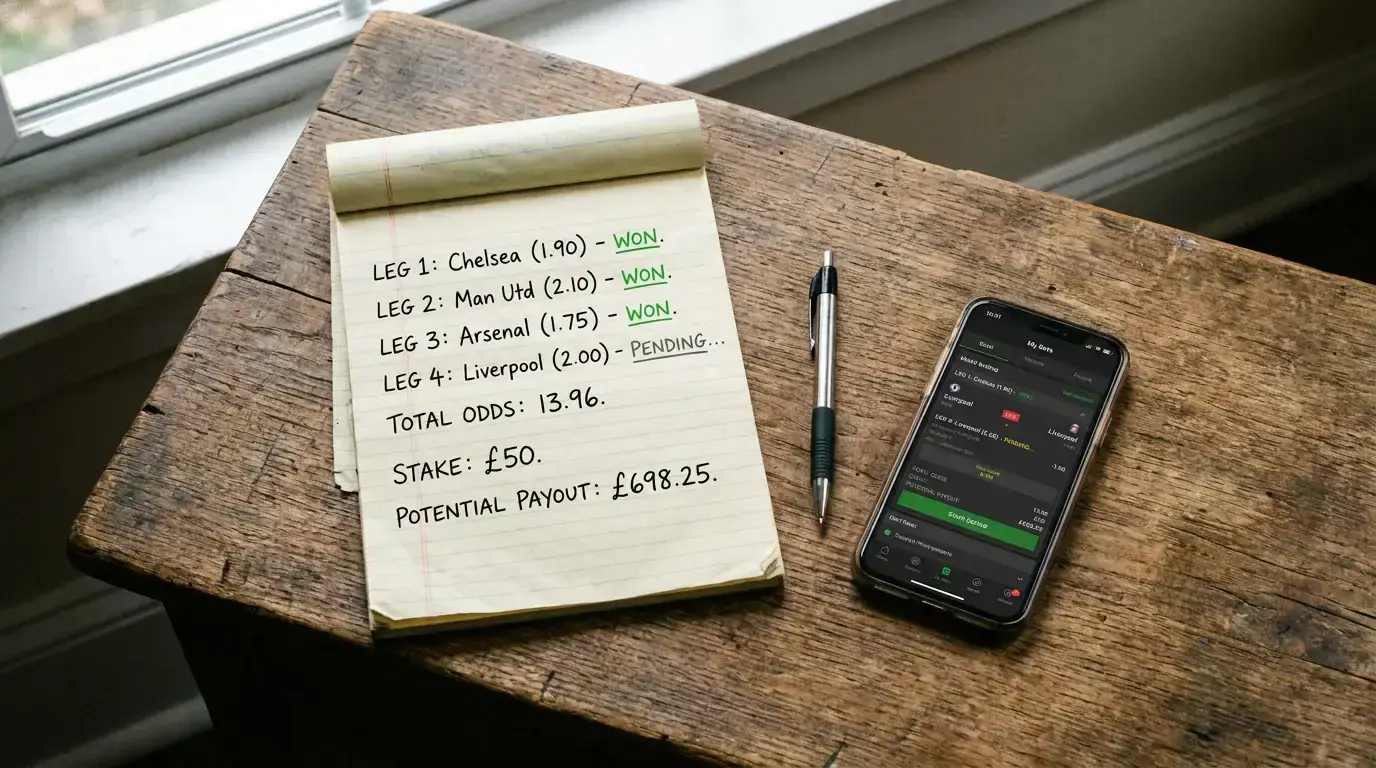
The effect is amplified for accumulators. Each leg of an acca carries its own margin, and the margins multiply. If you save 2% on each of four legs, the combined improvement on the accumulator payout is closer to 8%. Given that accas already face compounding overrounds, shaving even a few percentage points from each leg transforms the long-term expected value from deeply negative to only marginally negative — or, when combined with genuine analytical edges, to positive.
Building a Line-Shopping Routine
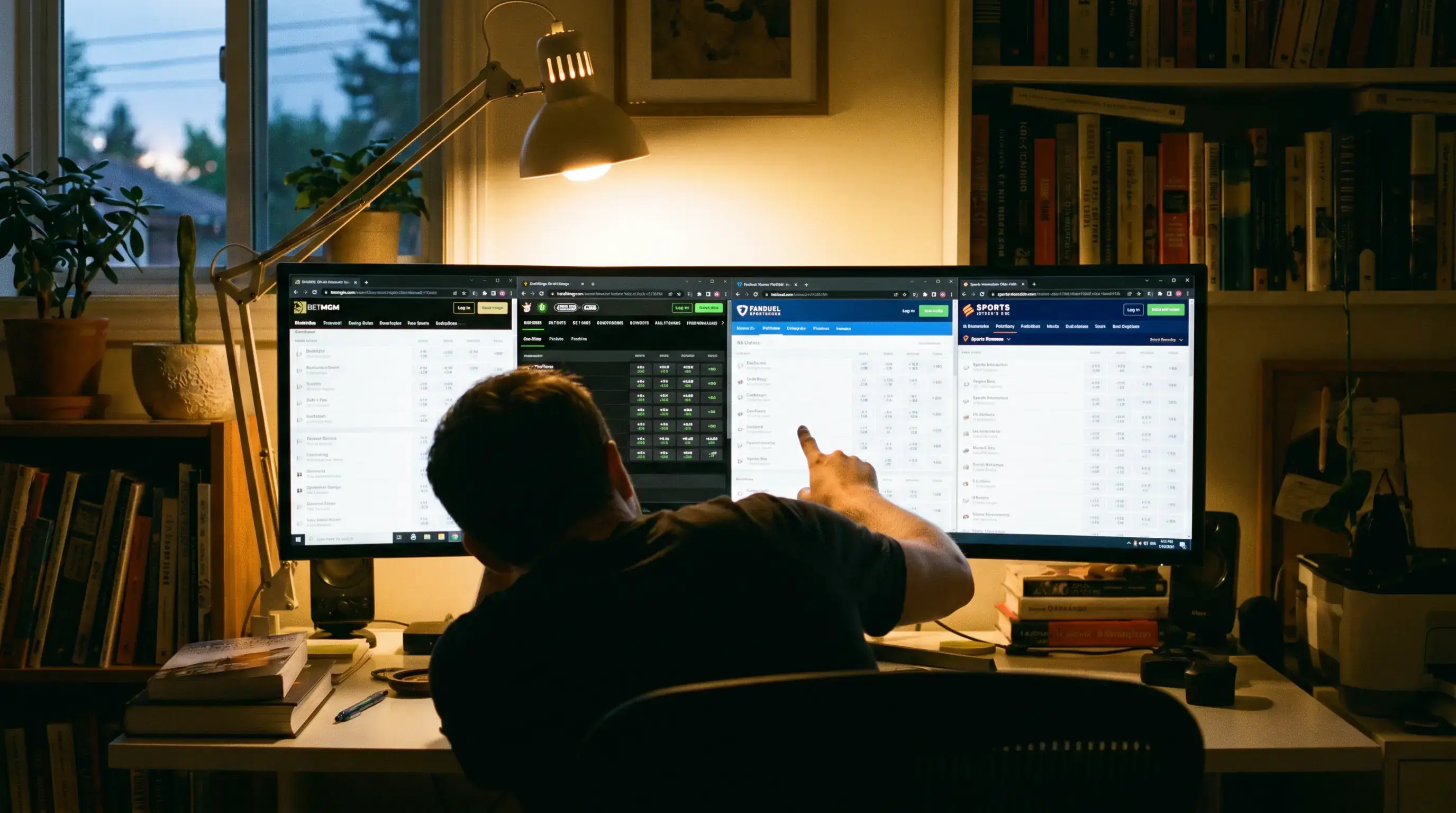
My routine is simple and takes five minutes per game. I open the NHL sections of four UK bookmakers on separate browser tabs. For each game I plan to bet, I note the moneyline, totals and any secondary markets I am targeting. I record the best available price for my chosen side and place the bet at that platform.
The key discipline is placing the bet at the best price rather than the most convenient platform. Convenience kills edges. If your primary bookmaker offers -140 and a secondary account offers -130, the bet goes on the secondary account. Always. The two minutes spent comparing will outperform any analytical refinement I could make to my model in the same time.
I also track which platforms consistently offer the best prices for specific market types. One operator might be tightest on moneylines but wide on totals; another might offer the best props. Over time, a pattern emerges that lets you skip directly to the platform most likely to have the best number for the bet type you are placing, reducing the comparison time from five minutes to two.
For readers building their line-shopping habit alongside analytical improvements, the value betting guide covers how to identify when a price represents genuine value versus merely looking different from another bookmaker’s number.
When Line Shopping Matters Most
Not every bet benefits equally from line shopping. Heavy favourites priced at -250 versus -240 carry a difference of roughly 0.7% in implied probability — barely worth the effort. Close matchups priced at -110 versus -120 carry a difference of 2.3% — highly significant over volume.
The highest-value line-shopping situations are pick’em games (near even odds), where a ten-cent difference translates to maximum percentage gain; prop markets, where pricing variance is widest due to lower handle and less modelling precision; and live betting, where the speed of odds updates varies dramatically between platforms, creating windows where one bookmaker has adjusted and another has not.
Live-betting line shopping is the most challenging because speed is critical. A goal is scored, one platform adjusts within two seconds, another takes fifteen. That thirteen-second window is an eternity in betting terms, and the bettor who has both platforms open and ready to act captures a price that no longer exists moments later. It is not for everyone — it requires preparation, quick fingers, and a stomach for occasional mis-clicks — but the rewards for those who execute it well are disproportionate to the effort involved.